




-
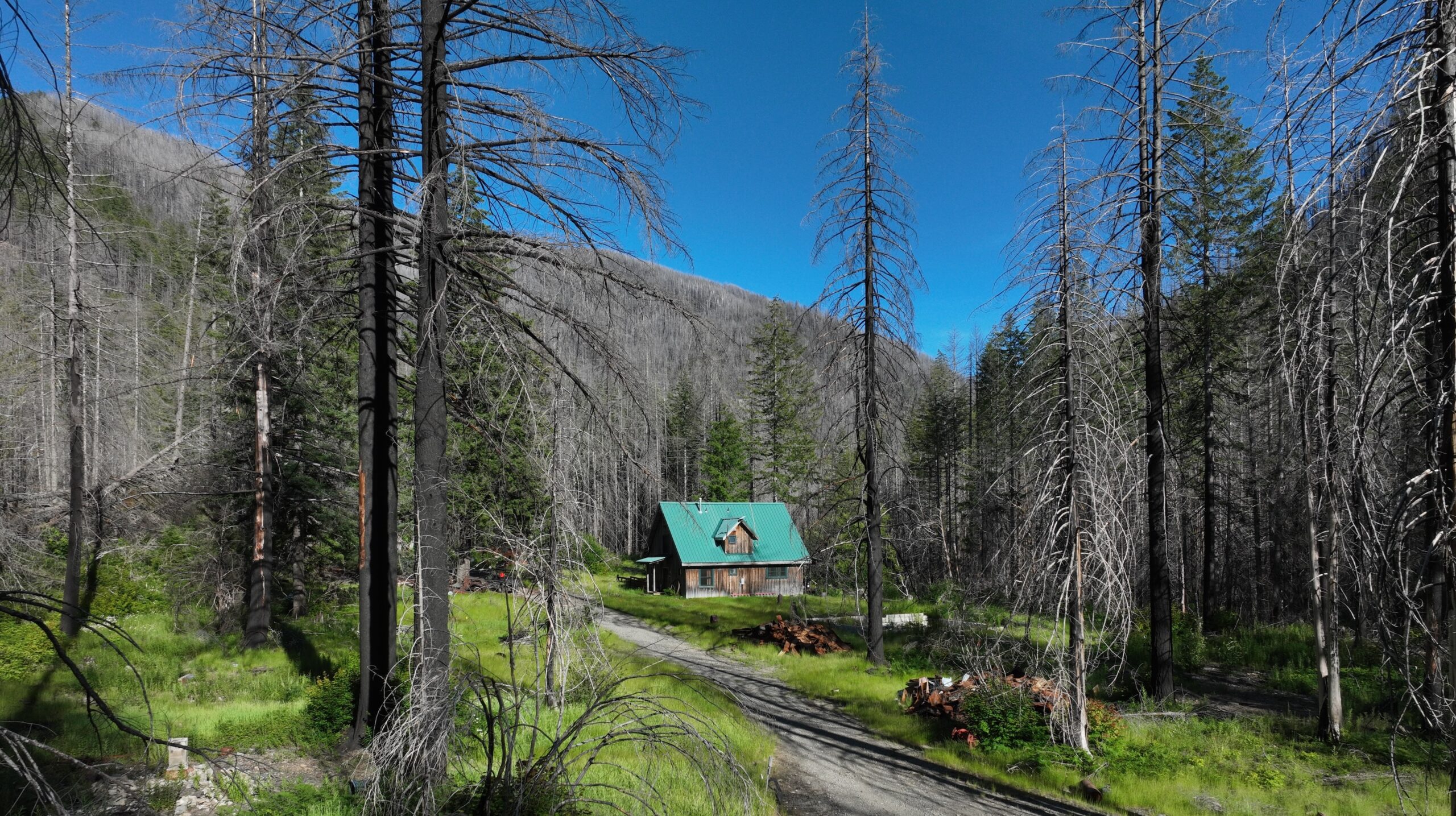
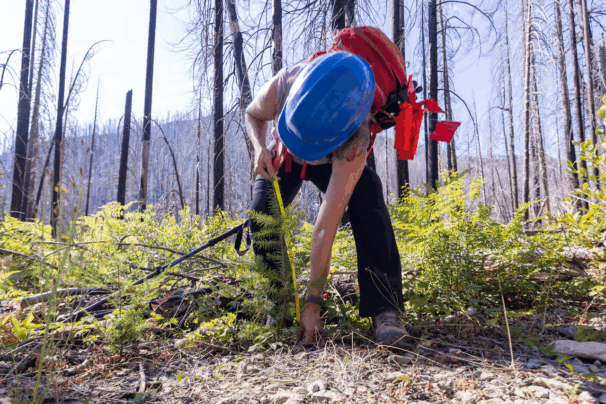
- Forest recovery monitoring–Willamette University: Annual assessment of forest health across burned and unburned areas, focusing on tree response, canopy changes, understory regeneration, and fuel loads along riparian to upland transects.
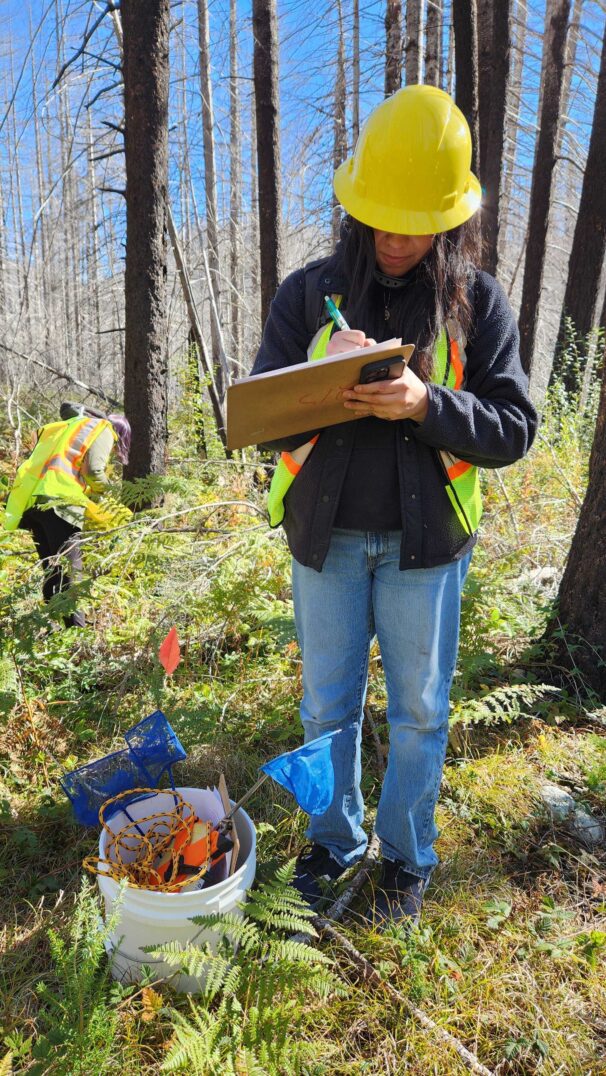 Photo point monitoring–Portland State University: Fixed photo points along the access road to track vegetation recovery, soil conditions, and standing snags over time.
- Post-fire gastropod diversity–The Evergreen State College: Surveys assessing land snail and slug abundance, distribution, and recovery in varying burn severities, with DNA sampling to analyze species diversity and ecosystem contributions.
- Amphibian surveys–Reed College: Surveys monitoring presence/absence of Oregon slender salamanders and other amphibians in intact old growth and burned old growth areas.
- First foods monitoring–Confederated Tribes of Grand Ronde: Documentation and monitoring of culturally significant species, including huckleberry and beargrass, to track post-fire regeneration along traditional trail routes like Whetstone Mountain.
Availability
The Opal Creek Field Station is open to scientists, university students, professors, classes and groups from May 1 to October 31 each year. Availability is limited, and reservations are required in advance.
Rates
Station stays support the ongoing maintenance and staffing of Jawbone Flats. Rates include lodging, outdoor classroom access, satellite Wi-Fi, and a UTV gear shuttle. 2026 rates do not include meals, though we plan to offer food services in future years. Below is a breakdown of our rate structure:
-
- 1-4 people: $65 per person/night. To cover the cost of required on-site staffing and UTV transport, a 4-person minimum (or a flat fee of $260/night) is required for all reservations.
- 5-9 people: $55 per person/night.
- 10-13 people: $45 per person/night. Maximum occupancy is 13 people, or one per bed. Additional occupancy (tent sites) and group and university class rates are available upon request.
- Contributed Service Discount Rate: $20 per person/night discount from the rates above.
Facilities & Amenities
The station provides essential accommodations and resources to support fieldwork, including:
-
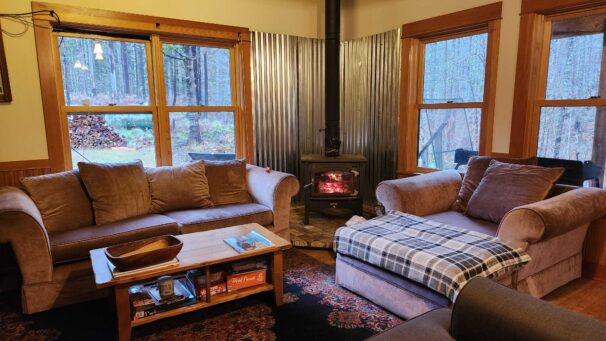
- Lodging: Four rooms with a total of 13 beds (beds include bottom sheets, pillows, and p
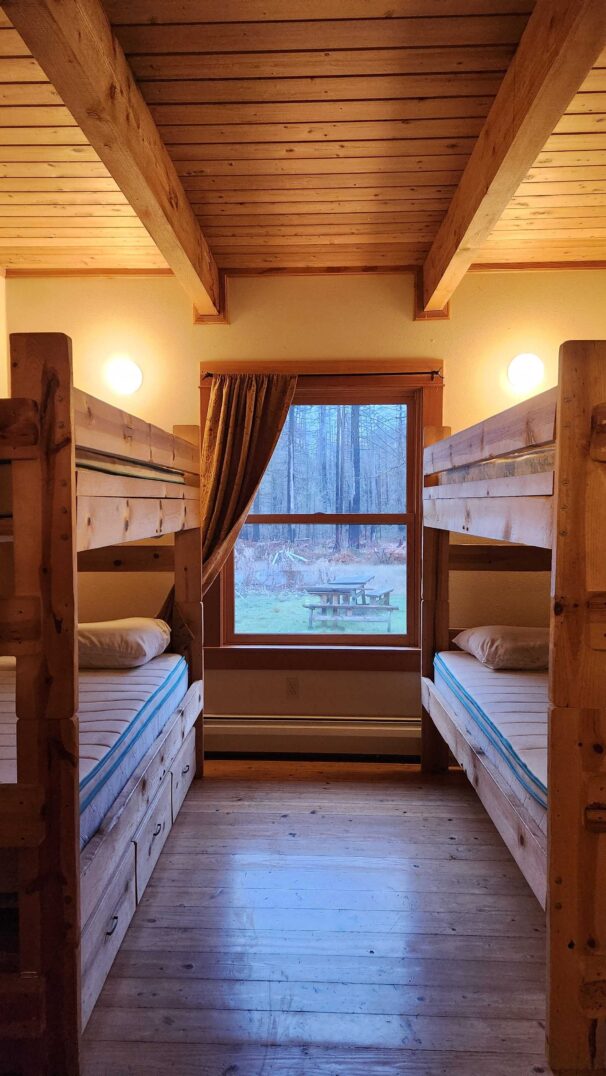 illowcases), two bathrooms, one shower, and shared living room.
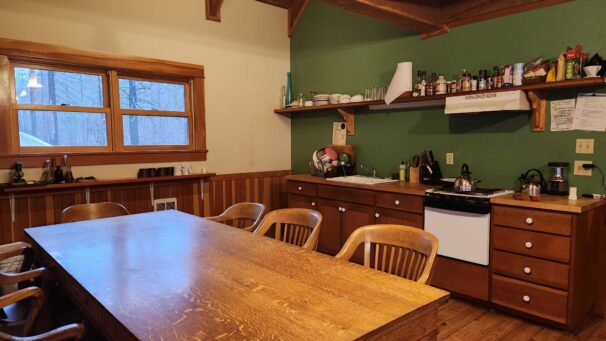
 - Kitchen: A shared kitchen facility with a three-burner stove is provided, but there is no refrigerator on-site. We encourage bringing coolers with ice for perishable food items.
- Workspace: Outdoor classroom space for collaboration and analysis.
- Utilities: Filtered drinking water, non-potable running water, heat (woodstove), off-grid solar power with a backup generator.
- Connectivity: Wireless internet access via satellite.
- Transport: A UTV shuttle to transport field equipment and personal gear/food.
- Lodging: Four rooms with a total of 13 beds (beds include bottom sheets, pillows, and p
Researcher Expectations
To ensure a productive and respectful environment, we ask all visitors to adhere to the following expectations:
During the trip: Pack lightly for transport via UTV shuttle (for field equipment and items necessary for your stay), be prepared to hike 3 miles from the trailhead to Jawbone Flats, expect to navigate steep slopes and rocky terrain to access research sites, cohabitate respectfully with other research teams and Opal Creek staff, and follow Leave No Trace principles to minimize environmental impact.
After the trip: Share data with Opal Creek archive (currently data will not be accessible to the public), acknowledge Opal Creek Ancient Forest Center in all presentations, publications, workshops, teaching documents and other professional venues, send hard copies and hyperlinks of all professional documents (see list above) to Opal Creek staff, and complete the Opal Creek Field Station questionnaire.
Permits
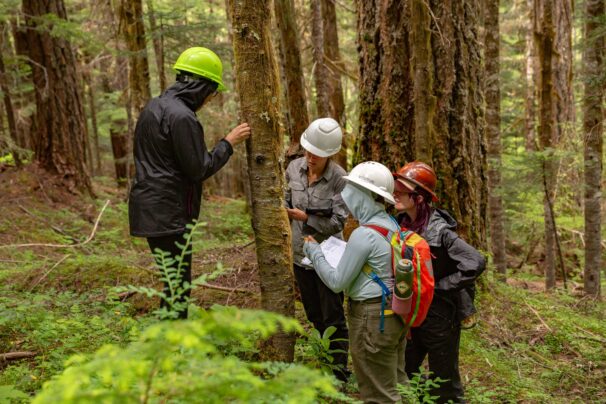
All researchers must obtain the necessary permits through either:
- The Detroit Ranger District of the US Forest Service. The recommended timeline is 6 months in advance. Contact information available upon request.
- Opal Creek Ancient Forest Center. Joining Opal Creek’s existing permit with the Forest Service may be possible for initial scouting trips and/or first field seasons depending on the topic and scope of research.
Additional Resources
- Frequently Asked Questions: Details on weather & climate, what to bring, emergency response, and travel information
- Ecology of Opal Creek: Discover the forest’s pre-fire biodiversity
- Place-Based History: The story of Jawbone Flats
- Organizational History: Explore Opal Creek’s legacy
Questions?
To learn more and/or make a reservation, contact Opal Creek’s Program Director, Megan Selvig at
- 📞 (503) 882-0399, 📧 mselvig@opalcreek.org
We look forward to supporting your research at the Opal Creek Field Station and advancing our collective understanding of forest recovery and resilience.
Opal Creek Ancient Forest Center operates under a research permit for the Opal Creek Scenic Recreation and Wilderness Areas of the Willamette National Forest.